In-Charge EV Installation
  • Home
  • Services
    • Andersen EV Charger
    • Commercial EV Charger
    • Easee One EV Charger
    • EO EV Charger
    • Rolec Charger
    • Hypervolt EV Charger
    • Ohme Home Pro
    • Tesla Wall Charger
    • Zappi EV Charger
    • Wallbox Pulsar Plus Charger
    • Sync EV Charger
  • Contact
  • Blog
Email Us Today

How to Get a Three-Phase Power and Why?

6/8/2023

 
Picture

In electrical terminology, a single-phase electric system is a system that distributes alternating current (AC) with varying voltages. Single-phase systems are used where the power requirement is not that high, for instance, a property that mainly utilises it for heating and lighting and where only a few large motors are installed. 

What is a Single-Phase System?

In electrical terminology, a single-phase electric system is a system that distributes alternating current (AC) with varying voltages. Single-phase systems are used where the power requirement is not that high, for instance, a property that mainly utilises it for heating and lighting and where only a few large motors are installed. The voltage in these systems reaches peak value twice every cycle; therefore, the power supply is not constant. A single-phase system delivers standard frequencies of either 50 Hz or 60 Hz. In the UK, most residential properties operate on a single-phase system. As the system uses only two wires, a live one and a neutral one, there is always a need for “grounding” or “earthing”, which offers protection from electrical shocks.

What is a Three-Phase System?

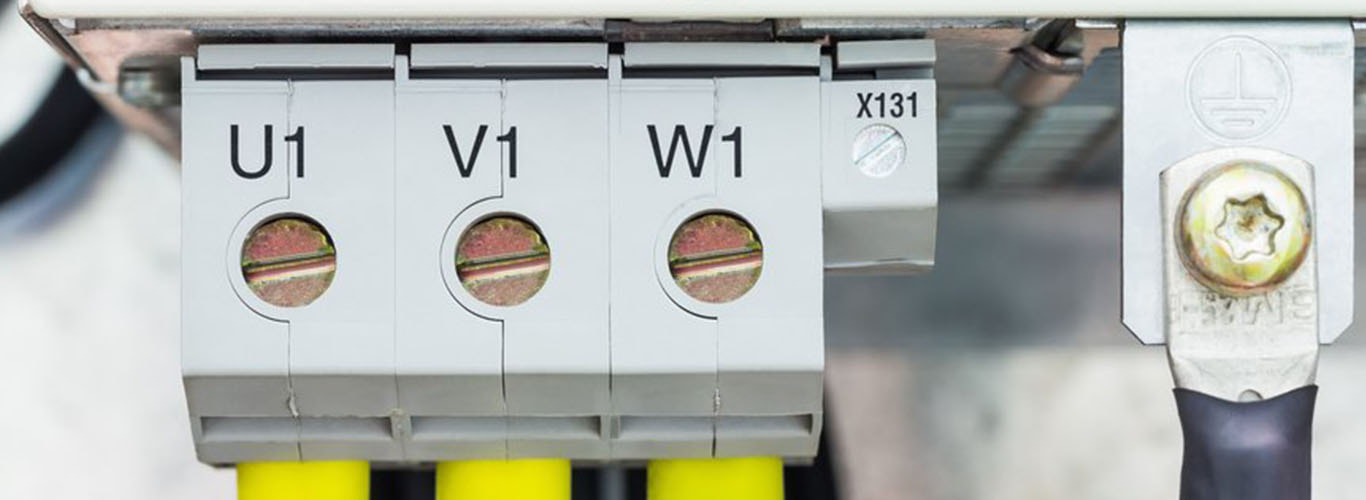
Like the single phase, the three-phase electric electrical system also supplies alternating current and is used in electricity distribution, transmission, and generation. However, instead of two wires, it employs three wires (and sometimes an extra one which acts as a neutral return wire). The three-phase system is widely used worldwide as one of the most common methods of electricity supply.

In a three-phase system, the currents and the voltage on all wires are 120 degrees out of phase. As an Alternating Current system, it enables the voltages to be conveniently stepped up or down to higher or lower voltages with the help of transformers.

Differences Between Three and Single-Phase Systems

  • Single-phase systems have two wires, one supplying the current while the other returning it to complete the path. This results in two peaks, 270⁰ and 90⁰, while the power is much lower during the rest of the current cycle. Three-phase systems are built on sharing power across three wires and have no drop-offs or no peaks, supplying uniform power constantly.
  • Because three-phase systems have no peaks/drop-offs, they are safer than single-phase systems, especially when the power requirement is higher than 20kVA.
  • Three-phase systems use much less conductor material than single-phase systems.

Which System is Better?

While a three-phase system is significantly better than a single-phase one, the choice also depends greatly on the purpose. Most old-fashioned homes still use a single-phase system and may fare well if they do not have high power requirements. However, many modern appliances are less safe in single-phase systems. Some are incompatible. At the same time, some require much higher power and may overload your circuit, resulting in electric failure. Three-phase systems not only deliver much higher power but are also more stable.

Can a Single-phase System Be Upgraded to Three Phase?

The answer is “yes”. They are not only suitable but better. Current single-phase systems can also be upgraded to three-phase. The scale of the modifications is highly dependent on your current configuration. Many variables are involved in this conversion, which might vary from case to case. The existing cabling that connects your home to the main power supply will have to be replaced. This may require digging, and the extent of the digging will depend on the distance of your home to the nearest three-phase supply. You will also have to change your distribution board from a single to a three-phase type and install RCD protection. However, the good news is that you will not have to change any wiring in your home.

Who Can Provide Installation/Upgrading Services?

Any competent and certified electrician can upgrade your single-phase system to a three-phase, but they are not authorised to change the supply. Only the DNO (Distribution network operator) is allowed to change the supply. You or your electrician must write an application to the DNO before any work is done.

The Cost of Replacement/Upgrading

As we said before, in most cases, the only two things that require replacement are your cabling and the distribution board. The cost of the cabling will depend on the distance of your home from the closest three-phase supply. The longer the distance, the higher the cost. If luckily, it is within a range of 25 metres, the cost will be low. However, the cost can be pretty high if the distance is in miles. As an estimate, it can cost you up to £4,000 if the distance ranges to 20m.

Advantages of Three-Phase Systems

  • Three-phase systems are more economical than single-phase systems as they use less conducting material for transmitting the same amount of power.
  • The power supply from a three-phase system is highly stable and therefore protects your appliances from burning out.
  • Heavy appliances are much safer with three-phase systems.
  • Modern appliances, such as high-powered Electric Vehicle Chargers, can only work with three-phase systems.

Can a Single-phase System Support EV Charging?

The use of electric vehicles has increased considerably worldwide, especially in the United Kingdom and Europe. They are considered to be more energy efficient and environmentally friendly. With this shift in preferences and increased government regulations, domestic and commercial users are installing EV (Electric Vehicle) chargers at their properties. Home installation of EV charging points provides incredible convenience. You can charge your electric vehicles at home and don’t have to look for a public/private charging point. You can benefit from off-peak charging, and you can charge your vehicle anytime you want. When it comes to domestic properties, most of them in the United Kingdom have a single-phase system which can support EV chargers up to 7.3kW. An EV charger with this capacity ranges up to 30 miles per hour. A 60 kW battery can be charged entirely overnight. Single-phase systems do not support the installation of any EV charger above 7.3kW. Moreover, low-capacity EV chargers will not be able to meet the charging requirements of businesses and commercial users.

What if My Charging Requirements Are Higher?

The higher the capacity of an EV charger, the higher its range and the faster it can charge. Domestic users who have to drive a lot, as a part of their job or for personal reasons, may not find a 7.3kW EV charger suitable for their requirements. In that case, they would require high-capacity chargers such as a 22kW charger or higher, which can charge your batteries from zero to full in much less time. Moreover, businesses that belong to sectors like transport & logistics and use electric vehicles will have much higher power requirements. In such cases, a 7.3kW charger will be painfully slow. So, for higher charging requirements, you need high-capacity chargers, which can only be supported by three-phase systems. Moreover, if you have more than one car in your family, you must take turns charging all the vehicles.

Which Power System is More Suitable for EV Charging?

Even if you still need high charging requirements and your requirements can be fulfilled by a 7.3 kW charger, it is still better to upgrade your single-phase system to a three-phase system. As the latter is more powerful, stable, and advanced, they keep your EV chargers safe and your other electrical installations.

Final word

Although choosing between single and three-phase systems is all about your preferences and power requirements, three-phase systems are always better. Three-phase systems are more efficient, whether EV charging or other modern appliances. When it comes to circuit safety, they are way ahead of single-phase systems. Single-phase systems will always be free from the risk of severe power fluctuations, which can result in damaging your appliances. Three-phase systems are hardly ever overloaded. They have a much longer life than single-phase systems, so upgrading your single-phase system is a good idea. Upgrading requires approval from the DNO, which your electrician should ideally do. The cost depends on several variables, including distance from the closest three-phase power supply. Always remember to hire certified electricians and compare quotes from more than one electrician to save money.


Comments are closed.

    Send us a message


    Submit

SITE LINKS

Home
Services
Contact

CONTACT INFORMATION

Phone: 07794412657
Email: [email protected]

OUR PARTNER LOGOS

Olev logo
EO charging logo
Niceic logo
In-Charge EV Installation Logo

© 2023 In-Charge EV Installation | Sitemap
Site powered by Weebly. Managed by FreeLogoServices.com
  • Home
  • Services
    • Andersen EV Charger
    • Commercial EV Charger
    • Easee One EV Charger
    • EO EV Charger
    • Rolec Charger
    • Hypervolt EV Charger
    • Ohme Home Pro
    • Tesla Wall Charger
    • Zappi EV Charger
    • Wallbox Pulsar Plus Charger
    • Sync EV Charger
  • Contact
  • Blog